Pure-play quantum stocks delivered powerful gains earlier in 2026, only to face a reset as investors began demanding stronger evidence of revenue conversion and commercialization. IonQ shares, for example, declined 5.4% after its second-quarter results, while Rigetti and D-Wave shares have lost 10.7% and 22.7%, respectively, since August 5.
The sharp volatility in pure-play quantum stocks indicates the risks of betting solely on companies whose valuations depend heavily on future commercialization. However, the opportunity in this space remains substantial. IBM IBM, Microsoft MSFT, Alphabet GOOGL, Amazon AMZN and NVIDIA NVDA are building different layers of the quantum ecosystem, from quantum processors and cloud platforms to software and the classical computing infrastructure needed to run quantum systems. This gives investors a way to participate in the sector's momentum without taking the full balance-sheet and valuation risks associated with pure plays.
Quantum Momentum Meets a More Difficult Market
The near-term quantum opportunity is increasingly about access and infrastructure rather than standalone quantum hardware sales. Cloud platforms allow enterprises and researchers to experiment with quantum systems without owning specialized hardware, while hybrid quantum-classical architectures rely heavily on conventional high-performance computing.
The market backdrop makes that distinction even more important. U.S. inflation remained elevated in July, with CPI rising 3.4% year over year and core CPI increasing 2.5% (The Bureau of Labor Statistics Data). On Sept. 1, the S&P 500 fell 0.71% and the Nasdaq declined 1.03% as oil prices and Treasury yields moved higher. The 10-year Treasury yield reached 4.79%.
Higher yields generally put greater pressure on long-duration growth assets, making cash-generating, diversified technology companies a more defensible way to gain exposure to emerging technologies.
Where Does the Opportunity Lie?
The next few months of 2026 are likely to be driven less by headline qubit counts and more by commercial milestones, cloud adoption, partnerships and integration with existing computing infrastructure.
That favors companies able to fund quantum investment from established businesses. It also creates an important distinction for investors: a stock does not have to be a pure quantum company to benefit from quantum adoption.
For investors seeking greater risk-adjusted return potential, the strategy should therefore be to prioritize companies where quantum represents an additional growth opportunity.
Against this backdrop, the following five stocks stand out for their strong positioning across quantum computing, cloud infrastructure and accelerated computing.
Stocks in Focus
IBM: It offers the most direct exposure in quantum. The company committed more than $10 billion over five years to quantum, spanning R&D, manufacturing, capital investment, partnerships and M&A. IBM has more than 340 organizations in its quantum network and targets fault-tolerant quantum computing with Starling in 2029. Its recent HRL Laboratories acquisition further expands capabilities in silicon-spin qubits, cryogenics, control electronics and quantum interconnects.
IBM currently trades at 17.9X forward 12-month earnings, below the S&P 500’s 20.1X, indicating a relatively attractive valuation compared with the index members. Meanwhile, the Zacks Consensus Estimate for 2026 earnings indicates 6.4% growth on a 4.5% revenue growth projection. The stock carries a Zacks Rank #3 (Hold).
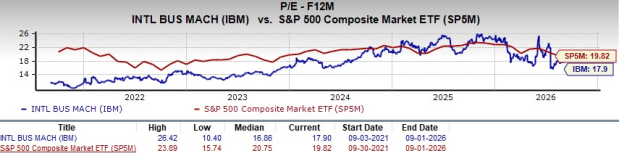
Image Source: Zacks Investment Research
Microsoft: It provides quantum exposure through its Azure ecosystem and proprietary hardware research. Its Majorana 2 processor uses a topological-qubit approach, with Microsoft reporting a 1,000-fold improvement in qubit lifetime versus its previous generation. Microsoft expects a scalable quantum computer by 2029. Beyond hardware, Microsoft's cloud and software infrastructure provides an established channel for quantum development and hybrid workloads, making quantum an additional growth opportunity rather than its core revenue driver.
MSFT currently trades at 24.78X forward 12-month earnings. The Zacks Consensus Estimate for fiscal 2027 earnings indicates 9.1% growth on a 17.2% revenue growth projection. The stock carries a Zacks Rank #3.
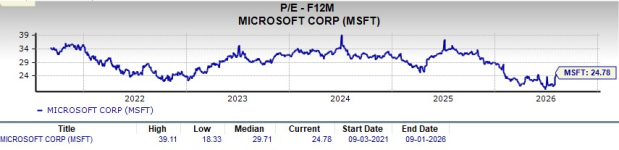
Image Source: Zacks Investment Research
Alphabet: Its Google Quantum AI remains a leading quantum research program. In 2026, Google expanded beyond its established superconducting approach into neutral-atom quantum computing, giving it exposure to two different architectures. The move could help reduce technology concentration risk as the industry continues to evaluate competing approaches to scalability, error correction and commercial deployment.
GOOGL currently trades at 20.14X forward 12-month earnings. The Zacks Consensus Estimate for 2026 earnings indicates 89.6% growth on a 26% revenue growth projection. The stock carries a Zacks Rank #3.
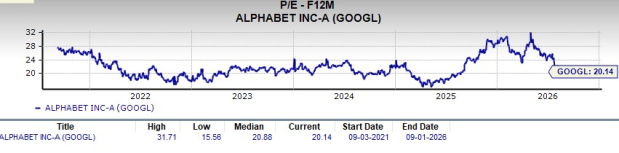
Image Source: Zacks Investment Research
Amazon: Its quantum opportunity is primarily an AWS cloud and infrastructure play. Amazon Braket provides access to multiple quantum hardware technologies through a unified cloud service, allowing customers to experiment without owning quantum systems. AWS also expanded its collaboration with QuEra to bring fault-tolerant quantum computing to Amazon Braket, with scientifically relevant applications targeted to begin in 2028.
AMZN currently trades at 26.13X forward 12-month earnings. The Zacks Consensus Estimate for 2026 earnings indicates 82.2% growth on a 15.7% revenue growth projection. The stock carries a Zacks Rank #2 (Buy).
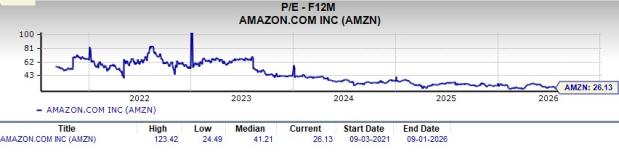
Image Source: Zacks Investment Research
NVIDIA: The company represents the infrastructure side of the quantum opportunity. Its CUDA-Q platform connects CPUs, GPUs and QPUs for hybrid quantum-classical workloads and supports multiple quantum hardware modalities. NVIDIA says CUDA-Q integrates with 75% of publicly available QPUs. Its NVQLink platform further connects quantum processors with accelerated computing for applications including error correction and hybrid workloads. This positions NVIDIA to benefit from quantum-classical integration without depending on a single QPU architecture.
NVDA currently trades at 17.51X forward 12-month earnings. The Zacks Consensus Estimate for fiscal 2027 earnings indicates 93.3% growth on an 87.4% revenue growth projection. The stock carries a Zacks Rank #1 (Strong Buy). You can see the complete list of today’s Zacks #1 Rank stocks here.
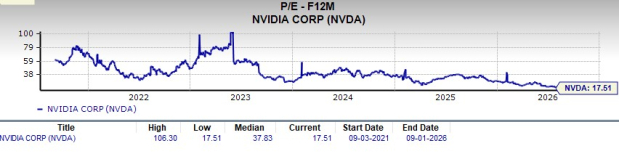
Image Source: Zacks Investment Research
Research Chief Names "Single Best Pick to Double"
From thousands of stocks, 5 Zacks experts each have chosen their favorite to skyrocket +100% or more in months to come. From those 5, Director of Research Sheraz Mian hand-picks one to have the most explosive upside of all.
This company targets millennial and Gen Z audiences, generating nearly $1 billion in revenue last quarter alone. A recent pullback makes now an ideal time to jump aboard. Of course, all our elite picks aren’t winners but this one could far surpass earlier Zacks’ Stocks Set to Double like Nano-X Imaging which shot up +129.6% in little more than 9 months.
Free: See Our Top Stock And 4 Runners UpWant the latest recommendations from Zacks Investment Research? Today, you can download 7 Best Stocks for the Next 30 Days. Click to get this free report
Amazon.com, Inc. (AMZN): Free Stock Analysis Report
Microsoft Corporation (MSFT): Free Stock Analysis Report
International Business Machines Corporation (IBM): Free Stock Analysis Report
NVIDIA Corporation (NVDA): Free Stock Analysis Report
Alphabet Inc. (GOOGL): Free Stock Analysis ReportThis article originally published on Zacks Investment Research (zacks.com).
Zacks Investment Research