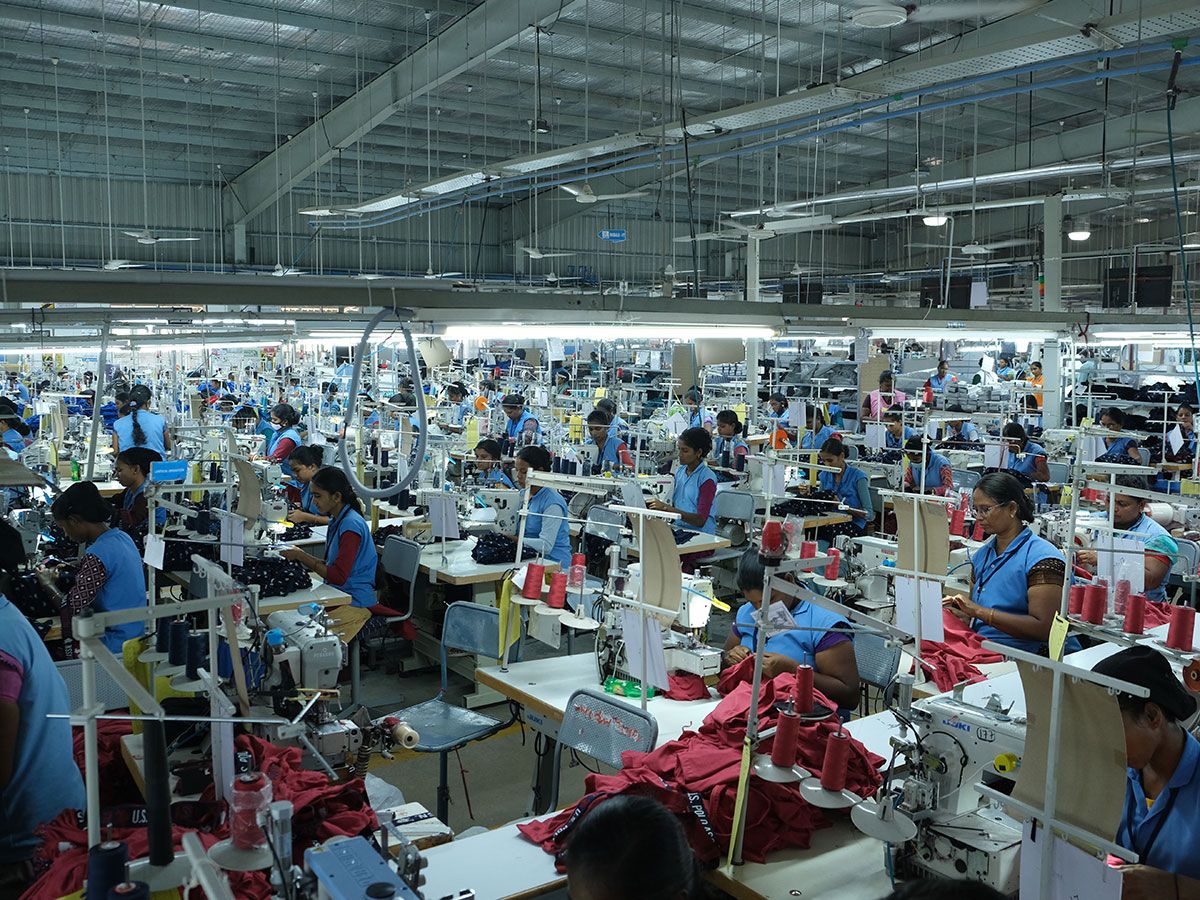
At 12 years old, Deepa started working at a garment factory making clothes for less than one Canadian dollar a week.
For most of her working life, the now 32-year-old southern Indian labourer says she has endured daily abuse from bosses, occasional beatings and little recourse.
That fate changed three years ago.
The key reason is a historic labour contract that followed the death of a garment worker in 2021. Signed in 2022 by a large Indian manufacturer, its workers and major international clothing brands, it was dubbed the Dindigul Agreement, after the southern Indian city where the signing took place.
Historic labour contract
That deal has improved working conditions for two-thirds of garment workers surveyed in factories producing brands sold in Canada such as Disney, Reebok, Tommy Hilfiger, Calvin Klein and U.S. Polo. Collectively, those workers reported fewer harassment cases, better complaint mechanisms and improved treatment from male colleagues and factory bosses, according to a survey of nearly 1,100 Indian garment workers conducted by researchers at Simon Fraser University (SFU) and Lead at Krea University, a research centre in India. This research was shared exclusively with the Investigative Journalism Bureau (IJB).
Of the workers surveyed, more than 80 per cent reported there has been more respect in the workplace compared to three years ago. And 87 per cent of workers reported increased wages in the same time frame.
But this proven model for protecting the people who make many of our clothes in Canada and the West faces a new challenge: major clothing brands appear to be pulling out of the agreement or are unwilling to sign on to similar ones in the future.
Since the Dindigul Agreement’s initial term expired in October 2025, there has been little interest from major clothing brands in agreements like it. Major Canadian players such as Lululemon and Aritzia were not signatories to Dindigul and have not apparently signed on to similar enforceable brand agreements with factories that make their clothes.
Factory executives in Dindigul say they have struggled to secure or continue doing business with brands since signing the agreement.
Even the clothing brands that did sign the Dindigul agreement — including H&M and PVH (which owns Calvin Klein and Tommy Hilfiger) — no longer source from there, according to their supplier lists.
“We believe the brands want to stay away from factories where there is a binding agreement with trade unions or labour groups,” said Alagesan Senniappan, executive vice-president of quality assurance for Eastman Exports, which owns the Dindigul factory.
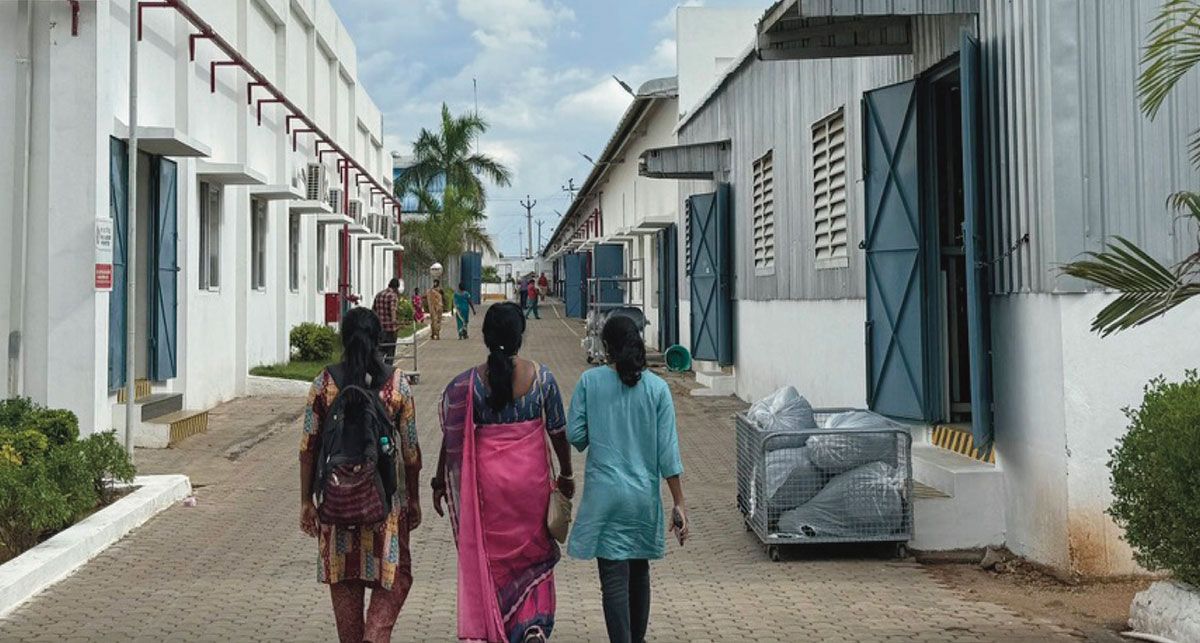
Senniappan said eight or nine brands declined to work with the factory after the death of the employee in 2021. Even when it signed on to the Dindigul agreement a year later and conditions dramatically improved, most of those brands never came back.
“We have a gold standard in our facilities, but that was not rewarded with the orders,” he said. “It has been a challenge.”
PVH declined to comment about the Dindigul agreement, including why it did not renew the agreement and whether it would be open to signing a similar one in the future.
An unattributed statement from H&M said, “We continue to work on the prevention of gender-based violence and harassment in our supply chain in India and globally with trade unions and experts.” H&M did not commit to signing a similar agreement in the future.
Disney did not comment on detailed questions from reporters about the agreement or improved working conditions; instead, it directed IJB reporters to its supplier code of conduct, which includes protecting human and labour rights for factory workers.
U.S. Polo spokesperson Stacey Kovalsky said, “We take the safety and dignity of workers across our global supply chain very seriously.”
An unattributed statement from Aritzia, which did not sign the original agreement, said the Vancouver-based company is “committed to respecting and upholding human rights throughout our value chain, in line with international standards and industry best practices,” including “seeking to make our products ethically and responsibly, and amplifying workers’ voices.”
The company did not comment on whether it would sign a Dindigul-style agreement in the future.
Canadian athletic retailer Lululemon, also not an original signatory, did not respond to interview requests. Reebok also did not respond.
Genevieve LeBaron, an expert on forced labour who is based at Simon Fraser University in British Columbia, and a lead researcher on the study, believes the reluctance of brands to build on the Dindigul agreement “says a lot about where their priorities are.”
“Companies’ primary goal is to make money … They would much rather be part of supply chain initiatives that are less successful, but cost them less, have less power for unions and workers and don’t require anything of them.”
Noah Dobin-Bernstein, garment programs director of U.S.-based Global Labor Justice (GLJ), says it’s disappointing to see so few brands taking active steps to embrace Dindigul-style agreements that seek to improve garment worker conditions.
“(Brands) are still hoping to maintain the fiction that they do not have an employer relationship or responsibility of any sort for the workers in their supply chains,” he said. “Given the margins in the industry … it would be a relatively small investment to eliminate a known gender-based violence problem.”
The extent to which Canadian brands embrace or reject the worker protections woven into Dindigul-style agreements is difficult to understand due to a lack of supply chain transparency.
Of the 25 Canadian clothing brands reviewed by the IJB, only 10 publicly disclose the factories from which they source garments. No laws in Canada require them to do so.
“You should (be able to) go to your store … and take a picture of the label with your phone and you should be able to see the factory in which it was made,” said Sarosh Kuruvilla, a Cornell University Professor and the director of the Global Labor Institute.
“That kind of transparency is what is required in the long run. And firms are not that transparent.”
Harsh treatment and low wages
The vast majority of garment workers in the global $2.5 trillion-dollar CAD apparel industry toil on factory floors through harsh treatment and low wages, producing the big-name brand T-shirts, jeans, jackets and other clothing sold on Canadian store shelves.
In extreme cases, the harassment has allegedly ended in rape or murder.
In February 2021, a 20-year-old factory worker named Jeyasre Kathiravel was allegedly raped and killed by her supervisor at an Eastman Exports factory in Dindigul. Kathiravel had reportedly suffered months of sexual harassment and intimidation, according to a local union.
The supervisor reportedly confessed to the crime and was subsequently jailed to await trial, according to local news reports.
Soon, a campaign targeted the clothing brands that sourced from Eastman factories: H&M, Gap and PVH. In a rare turn of events, the brands came to the table to negotiate with unions representing the workers and the factory.
The Dindigul Agreement was a legally binding contract that forced brands to impose financial consequences if the factory failed to fix violations of workers’ rights.
It empowered women to pursue a grievance process when they face abuse or harassment, which the companies must take seriously. The unions provided training to workers and upper management, while worker-elected shop floor monitors were put in place to manage and resolve worker grievances.

The new survey data shows that even factories in the region not part of the Dindigul agreement have seen widespread improvements in the treatment of workers.
“The headline is: ‘It works,’” said SFU’s LeBaron. “With a problem like gender-based violence, people have tried many things for 20, 30 years and nothing works … This worker-led initiative in a very short time period made very significant improvements.”
More than half of respondents said they noticed changes with respect to gender-based violence and harassment at work in that time.
“Now there are places to complain, so men are scared and don’t harass,” one worker told researchers.
A garment worker in Tirupur in southern India said “men are now a little more cautious … and women feel a bit safer. Earlier it was not like this.”
Advocates hope other similar agreements emerge to protect workers.
In 2024, two factories in Central Java, Indonesia, modelled an agreement directly after Dindigul following multiple reports of widespread gender-based abuses.
Overwhelmingly, however, labour researchers say, protections for factory workers are missing engagement from brands.
In October 2025, Paramasivam Pushpalatha was working at a Brandix factory in Avissawella, Sri Lanka, when she reportedly started to feel ill. She asked to leave but was denied, according to a local union and GLJ. Pushpalatha later died in hospital due to an apparent heart attack.
“This incident could have been avoided if management had taken the right measures. This is a preventable death,” said Abiramy Sivalogananthan, a South Asia regional coordinator for the organization Asia Floor Wage Alliance (AFWA).
Brandix denied that any employee negligence played a role in Pushpalatha’s death. It showed IJB reporters clips of CCTV footage that appear to show her working on the factory floor and walking to seek medical attention soon before being rushed to hospital.
Victoria’s Secret is the largest buyer from Brandix factories in Sri Lanka, but Dobin-Bernstein said the brand has not responded or met with the union.
An emailed statement from Victoria’s Secret says, “We have clear, enforceable standards and do not tolerate harassment, intimidation, or retaliation of any kind. These expectations have been reinforced directly with Brandix, and we remain committed to protecting workers’ fundamental rights, including freedom of association.” The brand did not comment on whether it has met with the local union.
Lululemon, a Canadian brand headquartered in Vancouver, is among the brands that source from Brandix in Sri Lanka, according to its supply chain disclosures. Aritzia said it has not sourced from Brandix since 2024.
Lululemon did not respond to a request for comment.
Brandix has not committed to adopting an agreement like the one in Dindigul.
“We would be happy to look at what Dindigul offers,” said Darshana Abayasingha, general manager of corporate affairs at Brandix. “We’re definitely open to seeing what we can do better to enhance employee conditions … But having said that, we are already at a fairly high compliance stage.”
It has been a year since the Dindigul agreement expired. Some hope that its effects will last.
“Brands need to be willing to act before more workers lose their lives,” SFU’s LeBaron said. “I hope (this research) helps brands shift their thinking.”
The Investigative Journalism Bureau (IJB) at the University of Toronto’s Dalla Lana School of Public Health is a collaborative investigative newsroom supported by Postmedia that partners with academics, researchers and journalists while training the next generation of investigative reporters.